
What to Expect from the Film Industry in 2026: Trends, Challenges & Opportunities
 The film industry, like many others in today’s fast-paced world, can change dramatically in a very short time. Those of us working in production, from local companies to international producers and agencies, know that standing still isn’t an option. To stay relevant, we need to keep adapting, stay on our toes, and be ready to respond to new challenges, technologies and creative trends as they emerge.
As we move into 2026, the global film and video production industry is evolving at a faster pace than ever before. New technologies, shifting audience behaviours and changing production practices are shaping the way films are made, funded, distributed, and experienced. For our camera crews, local producers and international production partners, understanding these trends is essential to stay competitive and creative.
In this post, we share some of the key industry trends and insights that we think will define 2026 and what they mean for filmmakers in Germany, Europe and beyond.
1. AI Continues to Transform Filmmaking Workflows
Whether we like it or not: Artificial intelligence is no longer just a buzzword — it’s becoming a more and more important part of how films are planned, shot and edited. From script analysis and previs (pre-visualisation) tools to automated editing features and predictive analytics, AI is speeding up workflows and reducing manual labour. Studios and independent producers alike are using AI to generate rough cuts, assist with visual effects and even explore narrative possibilities during pre-production.
But AI brings both benefits and challenges. Its integration into creative processes raises questions about authorship, ethics and transparency – as well as expanding and limiting creative abilities. Furthermore, the use of AI is still connected with certain prejudices. In 2026, we expect to see more filmmakers openly disclose how AI was used in production and post-production — a move toward responsible and transparent use of technology.
2. Virtual & LED Production Goes Mainstream
What used to be a Hollywood-only technology is now increasingly accessible across Europe. Virtual production — using LED volumes and real-time rendering — will become more common in 2026, even on mid-budget films and corporate video projects.
This trend has multiple implications:
- In-camera effects reduce the need for costly travel or elaborate physical sets.
- Hybrid workflows (combining real locations with virtual backgrounds) provide creative flexibility and cost savings.
- Productions can iterate scenes more quickly, reducing reshoots and streamlining post-production.
On top of these factors, virtual production aligns with broader industry goals, including sustainability (fewer location moves, fewer physical sets) and more dynamic storytelling.
3. Cloud Workflow & Remote Collaboration Become Standard
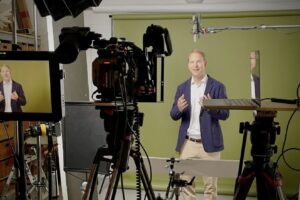 The shift to hybrid work sparked by the pandemic as well as the rise of internationally collaborating teams has matured into new production norms. Cloud-based collaboration platforms are now essential in daily workflows, allowing editors, producers and directors to work simultaneously on the same project from different locations.
These cloud solutions aren’t just for convenience — they are redefining how international productions are executed:
- Real-time edits and reviews speed up decision-making.
- Secure cloud storage simplifies asset management.
- Teams can work fluidly across time zones, reducing logistical bottlenecks.
This trend dovetails with the rise of remote filming solutions and live streaming technologies that let directors and clients contribute to shoots from anywhere in the world. We at Camera Crew Germany have started offering remote solutions for many years, offering efficient and cost-saving alternatives to in person shoots.
4. Format & Distribution Strategies Are Evolving
Streaming platforms remain a dominant force in how audiences consume visual content, and in 2026 we’re seeing this influence deepen. Traditional theatrical releases are no longer the only path to audience engagement. Hybrid release models — where films debut in theatres and on streaming platforms — are increasingly common, providing broader reach and flexibility.
This shift also affects production planning and financing:
- International co-productions can secure distribution deals earlier.
- Mid-budget films that might have struggled to secure theatrical windows now find homes on streaming platforms.
- There is a continued emphasis on content that travels well globally.
At the same time, festivals and theatrical experiences are not disappearing — blockbuster tentpoles and franchise films continue to draw large cinema audiences worldwide, underscoring that the big screen still has an important role in the ecosystem.
5. Sustainability and Ethics Are Strategic Priorities
Environmental and social responsibility are no longer optional considerations for progressive productions, they are strategic necessities from which the film industry is not exempt. Festivals, funding bodies, brands and audiences are increasingly demanding sustainability plans, ethical practices, and community engagement from film projects.
In practice, this means:
- Producing with zero-waste or low-waste set practices
- Minimising carbon footprints by optimising travel and equipment logistics
- Prioritising fair representation and inclusive storytelling
Producers who embed these practices early will have competitive advantage and gain better access to funding, distribution and talent.
Our camera crews are offered as locally as possible – decreasing travel time and costs as well offering experience with international clients seeking remote, self-driven and creative camera crews.
6. Independent and Micro-Audience Driven Content Thrives
While big studios focus on tentpole franchises and global blockbusters, smaller, agile filmmakers are finding success with niche, micro-audience strategies. Rather than targeting mass markets, some productions are focusing on tightly defined cultural, language or interest communities — and monetising them directly through subscriptions, memberships or targeted releases.
This trend also ties into direct-to-audience events, immersive releases, and creator-driven distribution, where filmmakers are more involved in the marketing and community building around their work.
7. Global Collaboration & Regional Hubs Expand Opportunities
 Traditional Hollywood dominance is being challenged by international production hubs offering competitive tax incentives, infrastructure investment and skilled local talent. Regions across Europe, including Spain and various German states, are capitalising on incentives to attract productions and build local creative economies.
This trend means:
- More international crews on the road
- Increased demand for multilingual production services
- Greater opportunity for local crews and facilities to participate in global projects
For Camera Crew Germany, this signals more cross-border collaboration and demand for high-quality, localised production support. With our hand-picked, bilingual camera crews located all over Germany and across Europe, we know what’s important for international producers.
8. The Audience Experience Continues to Evolve
Finally, evolving audience and target group expectations will shape content and technology in 2026. From interactive storytelling and immersive video experiences to data-driven content tailored for attention spans, creators are racing to capture viewer interest in new ways.
This includes innovative uses of XR (extended reality), real-time engagement features and multimedia experiences that blur the lines between film, gaming and live events.
Social media continues to play a growing role in how stories are told, shared and discovered. Short-form platforms have influenced pacing, visual language and narrative structure, pushing filmmakers to communicate ideas more quickly while still creating emotional impact. At the same time, social media has become a powerful extension of traditional filmmaking, allowing stories to live beyond the screen through behind-the-scenes content, episodic formats and direct audience engagement. In 2026, successful storytelling increasingly adapts to each platform, blending cinematic craft with the immediacy and authenticity audiences expect online.
In Summary: 2026 Is a Bridge Year
2026 feels like a bridge between traditional filmmaking and a more tech-driven, flexible, audience-centric future. AI, cloud workflows, virtual production, hybrid distribution and sustainability are not distant trends, they are operational realities. Producers and crews who embrace these changes while maintaining strong creative values will be best positioned for success.
The film industry has always been shaped by change, and 2026 will be no different. As technology evolves, audiences shift and new platforms redefine how stories are consumed, the industry continues to reinvent itself, often faster than expected. As filmmakers, producers and creatives, we must do the same. Embracing new tools, refining our craft and staying curious allows us not only to keep pace with change, but to shape it. Those willing to adapt while staying true to the fundamentals of good storytelling will be best positioned to thrive in the years ahead.
Whether you’re planning a documentary shoot in Berlin, a corporate production in Munich, or an international broadcast project across Europe, understanding these trends will help you stay ahead of the curve and deliver exceptional work this year and beyond.
Let’s collaborate to turn these ideas into reality in 2026!
